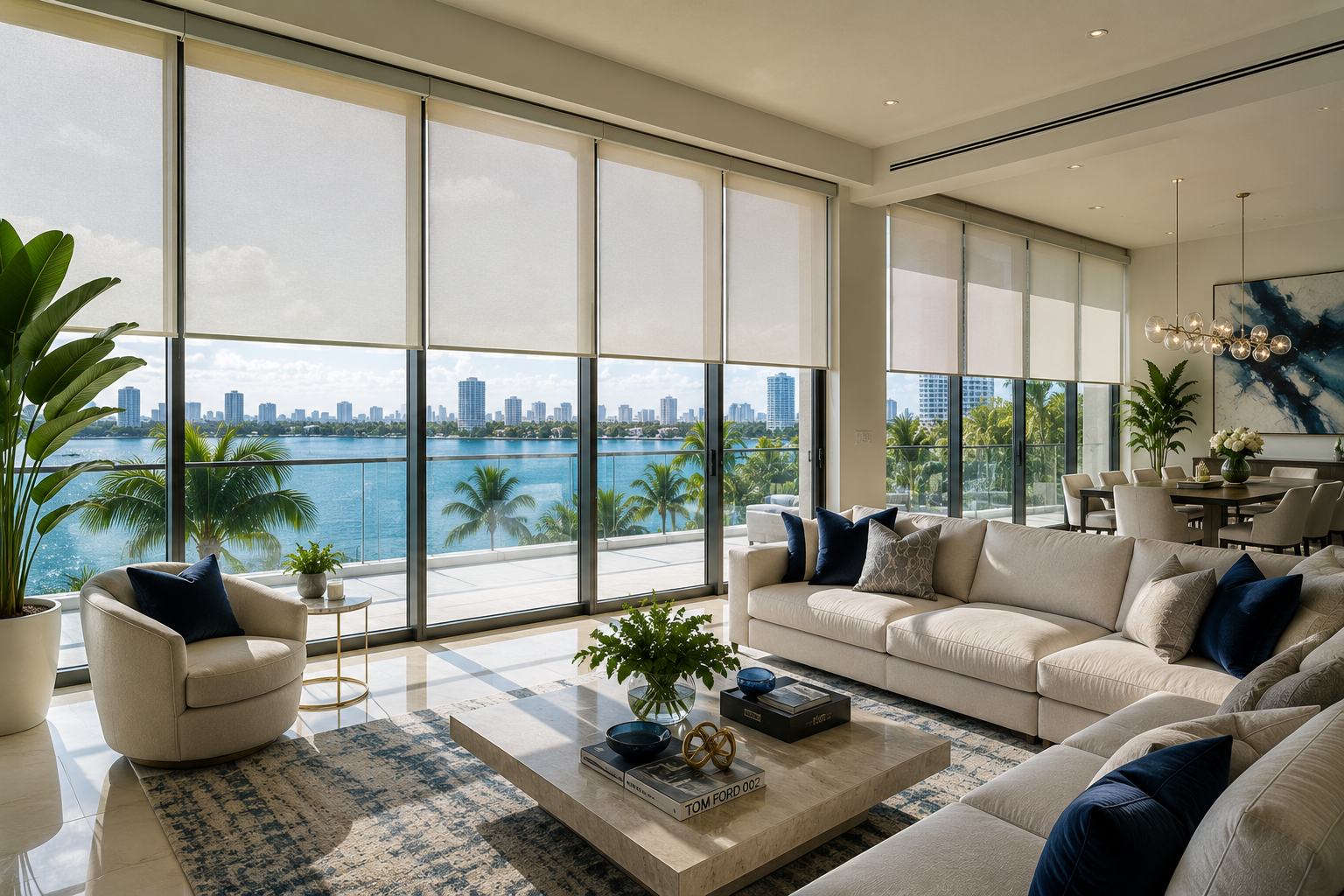
Roller Shades in Miami and South Florida
A roller shade is the simplest window treatment there is: one flat fabric on one tube. Everything that matters happens in the fabric choice. The same hardware can carry a solar screen that keeps your ocean view while cutting heat, a light-filtering fabric that softens midday sun, or a blackout fabric that makes a bedroom genuinely dark.
Why homeowners choose roller shades
- Solar fabrics with 1%-14% openness reject heat and UV while preserving the view
- Blackout options for bedrooms, nurseries and media rooms
- Minimal stack — the roll almost disappears when open
- Easy to motorize and group by room or facade
Frequently asked questions
Which openness factor should I choose for a west-facing window?
For strong afternoon sun we usually recommend 3% or 1% openness — it cuts glare and heat noticeably while keeping the outward view. 5%-10% is fine for shaded or north-facing glass.
Can roller shades cover a sliding glass door?
Yes. A single panel can span up to 144 inches, and wider openings are split into matched panels so the fabric hangs flat and tracks straight.
How a roller shade is built
The fabric is welded or sewn to an aluminium tube and rolls onto it. A bracket at each end carries the tube, and the top can be left open, covered with a flat fascia, or enclosed in a cassette. A bottom rail — exposed, wrapped in the fabric or sealed — keeps the fabric hanging square.
Because there is almost no mechanism, a roller shade has the smallest stack of any product we sell. Raised, the roll is a few inches of tube at the top of the opening, which is exactly what you want on a window whose whole point is the view.
The three fabric families
Almost every roller shade decision in South Florida comes down to choosing between three fabric families for each room.
- Solar screen — an open-weave technical mesh. You still see through it to the outside, but glare and solar heat at the glass are cut substantially. This is the fabric for water views, balconies and any wall of glass you do not want to hide.
- Light filtering — a closed but translucent fabric. It glows with soft daylight and gives daytime privacy, but you do not see out through it. Good for street-facing living rooms, dining rooms and bathrooms.
- Blackout — an opaque fabric, usually with a coated or laminated backing. It blocks the light passing through the fabric itself; light that escapes around the edges is controlled with mount choice and, where needed, side channels.
Openness factor, view-through and glare
Solar screen fabrics are described by an openness factor — the proportion of the weave that is open. A lower number means a tighter weave: more shade, less glare and less view-through. A higher number keeps more of the view and lets more light in.
In practice we recommend a tighter weave on west and south-facing glass, where the afternoon sun is the problem, and a more open weave on shaded or north-facing windows where the goal is simply to take the edge off. The fabric colour matters as much as the openness: dark fabrics preserve view-through and control glare better, light fabrics reflect more heat but can look hazy against bright sky.
We bring samples and hold them against your own glass at the measure, because openness numbers on paper never predict how a fabric will read on a specific window.
Manual and motorized operation
Manual roller shades use a continuous bead chain or a cordless spring mechanism. Cordless is the safer default in family homes and is what we specify unless the drop or fabric weight makes a chain the better option.
Motorized roller shades are the standard answer for floor-to-ceiling glass, tall stairwell windows and long slider walls, where reaching a chain is impractical and where several shades should move together. Motors can be rechargeable, solar-charged or hardwired, and connect to remote, wall switch, app and voice control as described on our motorized shades page.
Large windows, sliders and grouped runs
Wide openings are normally covered with matched panels rather than one very wide shade. Splitting a run keeps each fabric hanging flat, keeps operation light, and leaves the door leaf you actually use accessible. Panels are aligned so bottom rails sit on one line across the wall and the gaps between them are even.
On a long wall of glass we plan the run at the measure — where the splits fall, whether a shared fascia ties them together visually, and whether the shades should be grouped onto one motorized channel.
How roller shades compare
Roller shades vs zebra shades
Roller shades commit to one fabric behaviour; zebra shades trade between view and privacy as you move them. If a single fabric already solves the window — solar on a view wall, blackout in a bedroom — a roller is cleaner, slimmer and less expensive to operate. If one window has to do both jobs, zebra is the better fit.
Roller shades vs cellular shades
Cellular shades add insulating air pockets at the glass, which is their whole reason to exist. Rollers do not insulate the same way, but they offer solar screen fabrics that a cellular shade cannot: view-through with glare control. Choose cellular when the goal is a cooler, quieter room; choose roller when the goal is the view.
Roller shades vs drapery
These are usually layered rather than compared. A solar or blackout roller does the functional work at the glass and a drapery panel softens the opening and finishes the room. Where a single product must do everything and the room is contemporary, the roller alone is often enough.
Rooms and applications
Waterfront and high-rise living rooms
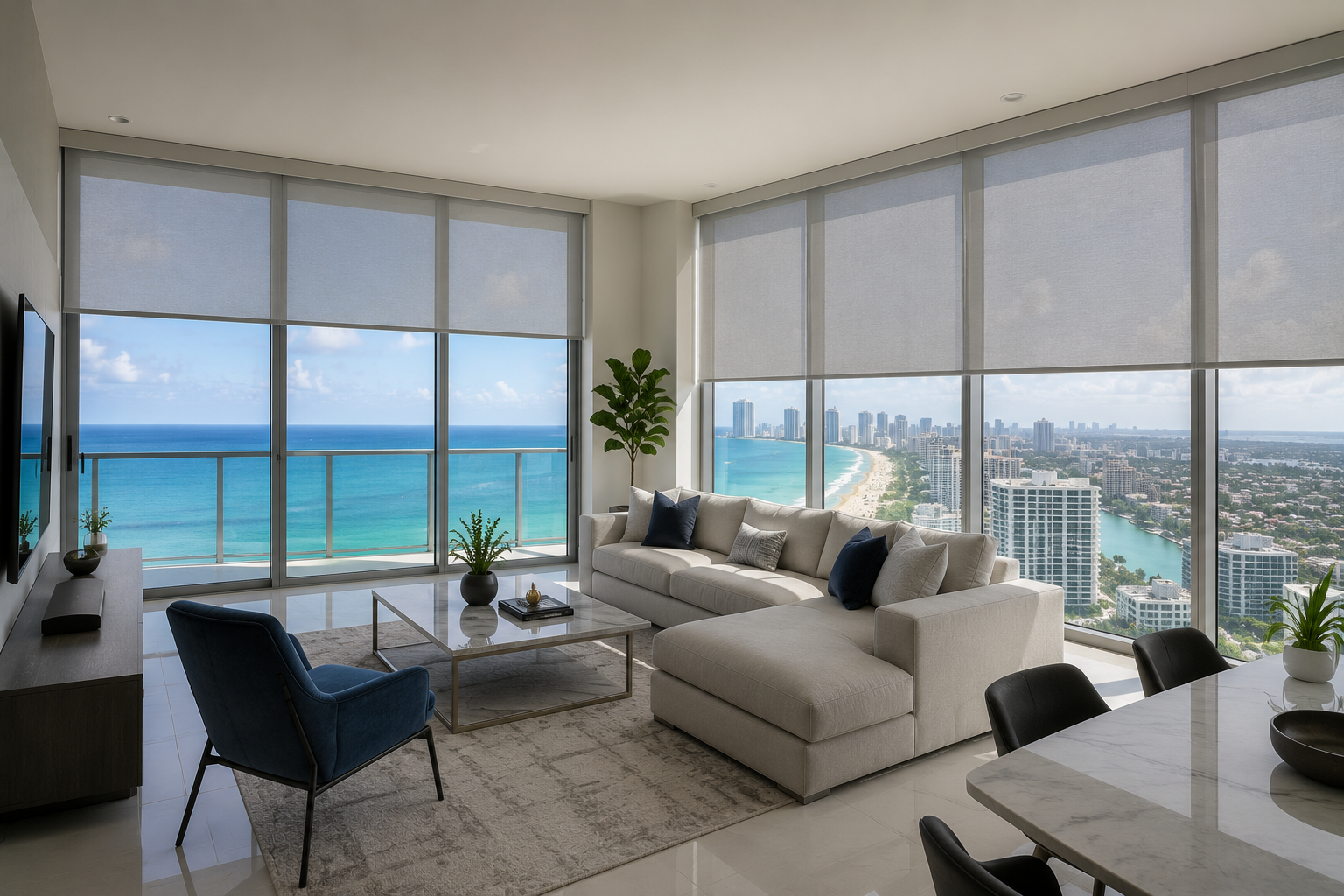
Solar screen on floor-to-ceiling glass is the most requested combination we install: the water stays visible, the glare on the TV and the heat at the sofa both drop.
Bedrooms
Blackout fabric, generally on an outside mount with overlap on all four sides, or an inside mount with side channels where the trim allows. Sleep quality is a function of edge light, not just the fabric.
Bathrooms
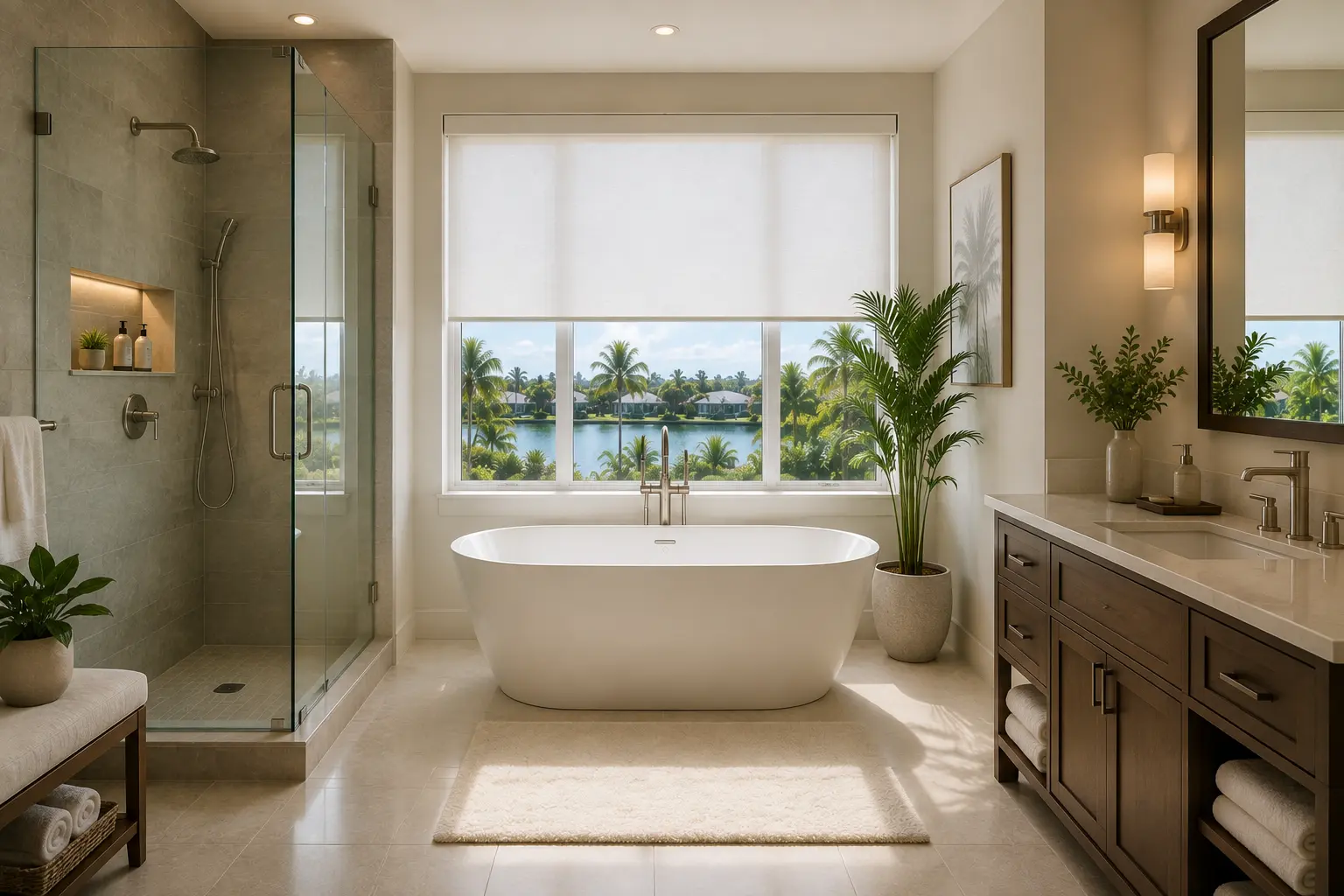
A light-filtering or privacy fabric keeps the room bright and completely private. Moisture-tolerant technical fabrics hold up better than textiles in a shower room.
Home offices
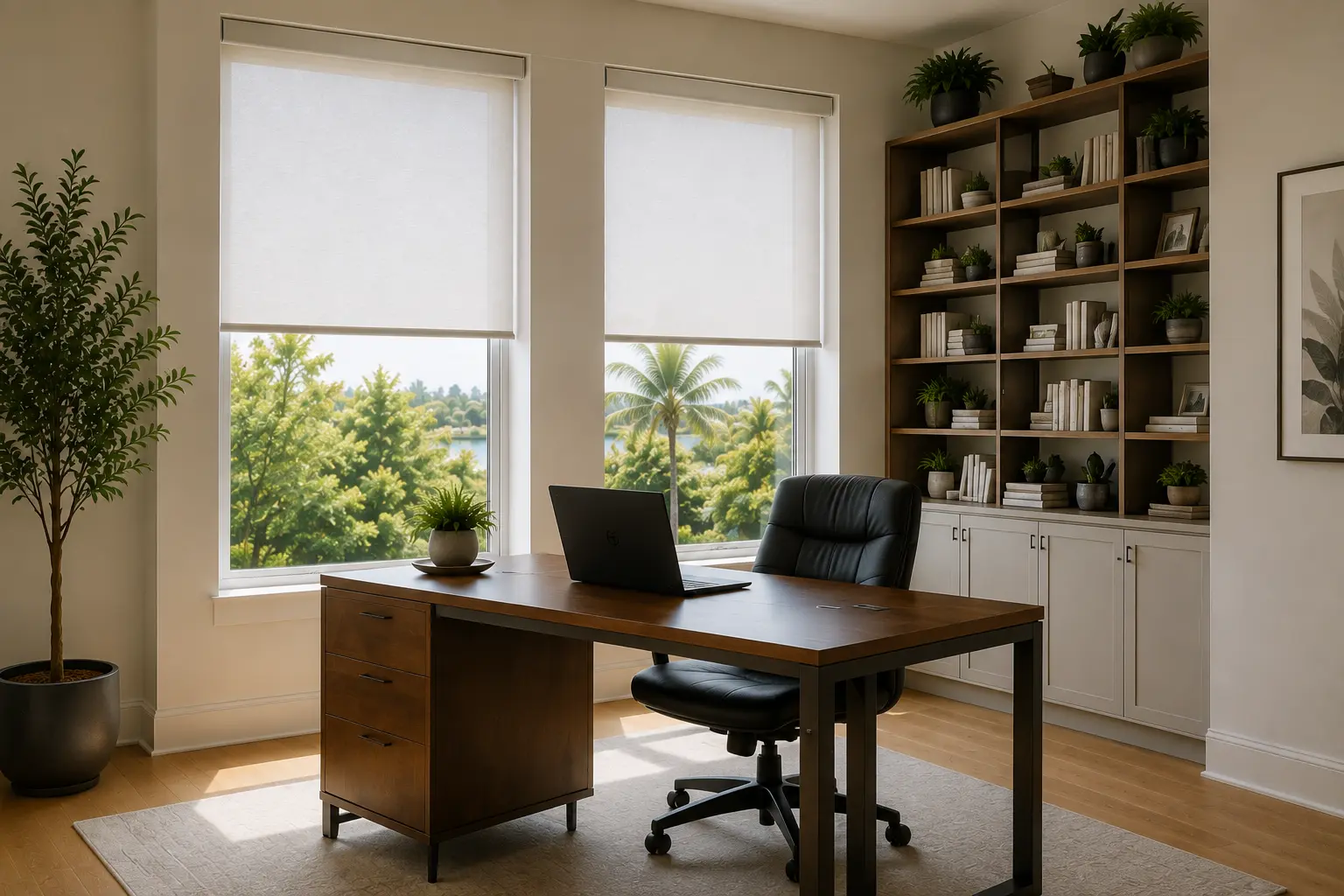
Screen glare is directional. A solar screen sized to the whole window, or a dual layer where a call background matters, keeps monitors readable through the day.
Sliding glass doors
Matched panels across the opening, split so the active door leaf stays usable, with a shared fascia to keep the top line continuous.
How to measure for roller shades
Roller shades are unforgiving about edges: the fabric is narrower than the bracket-to-bracket span, so an inside mount always leaves a small light gap at each side. Measuring is mostly about deciding whether that gap is acceptable in this room.
- Measure width at top, middle and bottom; on an inside mount the narrowest measurement governs, and the finished fabric will be slightly narrower still.
- Measure height at left, center and right, and decide whether the shade stops at the sill or runs past it onto the apron.
- Check the mounting depth available for the tube and, if specified, the fascia or cassette — deeper and wider shades need larger tubes and therefore more depth.
- Note anything projecting into the opening: window handles, crank arms, security contacts and deep sills all change the bracket position.
- For a blackout bedroom, plan overlap deliberately — an outside mount with generous side and top coverage, or side channels, is what removes edge light.
- On wide openings, plan the panel split at the measure so the bottom rails line up and the active door leaf is not blocked.
DIY measurements are useful for planning and preliminary estimates. Final measurements for custom-made window treatments should be verified professionally before production — see our measuring guide or book a free professional measurement.
Professional installation
- 1.Measurements, fabric, roll direction and mount type are confirmed against the units on site before any hole is drilled.
- 2.Brackets are set level and square, with clearance checked against handles, trim and sills.
- 3.The tube is seated, the fabric run through its full travel and checked for tracking so it does not creep to one side.
- 4.Fascia or cassette covers are fitted last so the top line is continuous across grouped shades.
- 5.Motorized shades have their upper and lower limits set, groups assigned and app or voice control tested before we leave.
Care and cleaning
- Dust regularly with a soft brush; solar screen mesh releases dust easily and rarely needs anything more.
- Spot-clean light-filtering and blackout fabrics with a barely damp cloth — never scrub a coated blackout backing.
- Let a shade dry fully unrolled; rolling damp fabric onto the tube is the main cause of marking.
Helpful guides
Often compared with
Recent roller shades projects
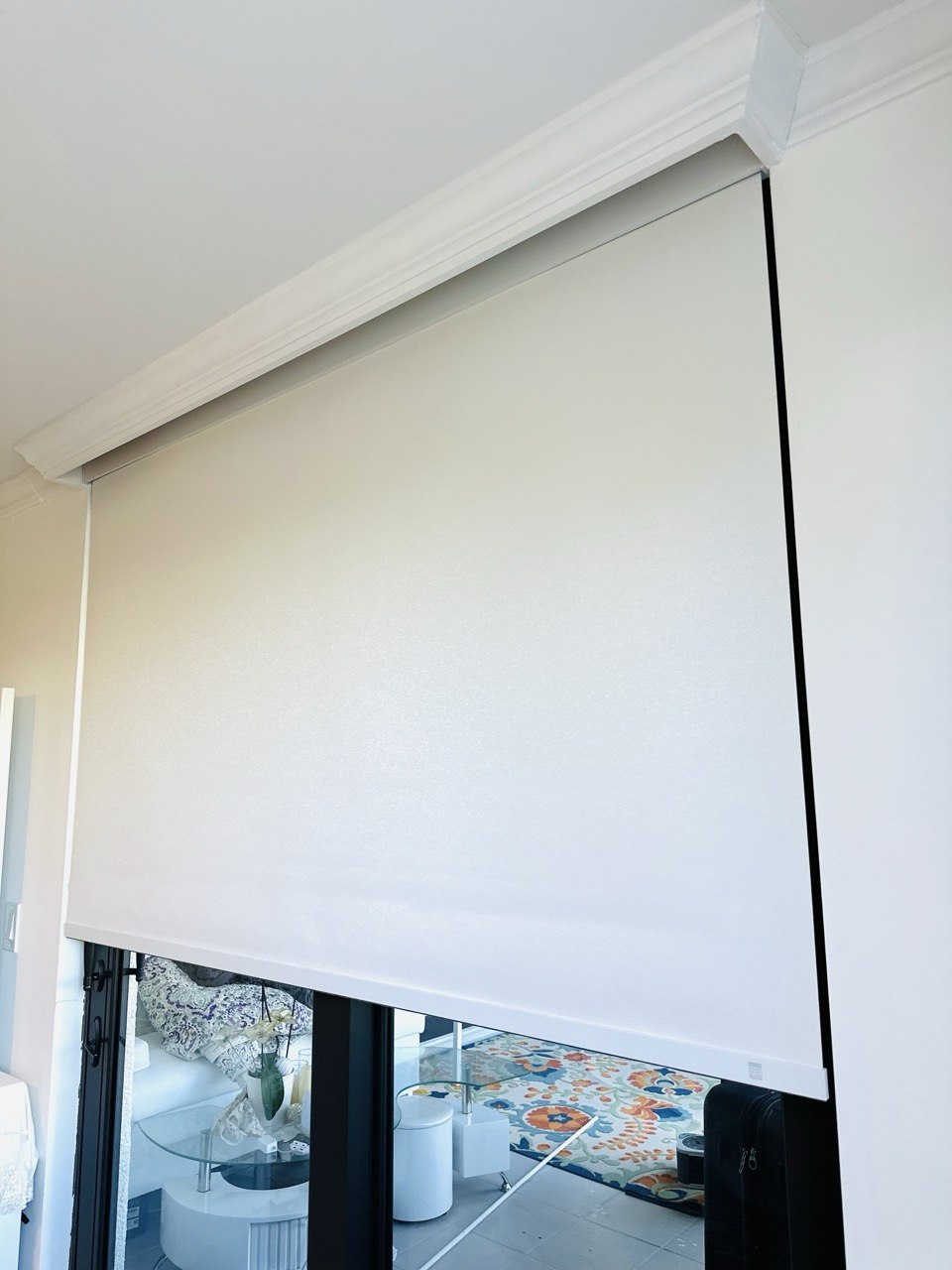
Condo · Motorized (remote)
Motorized roller shade on a Boca Raton bedroom slider
One motorized roller shade fitted to a bedroom sliding glass door in a Boca Raton condo.
Roller Shades
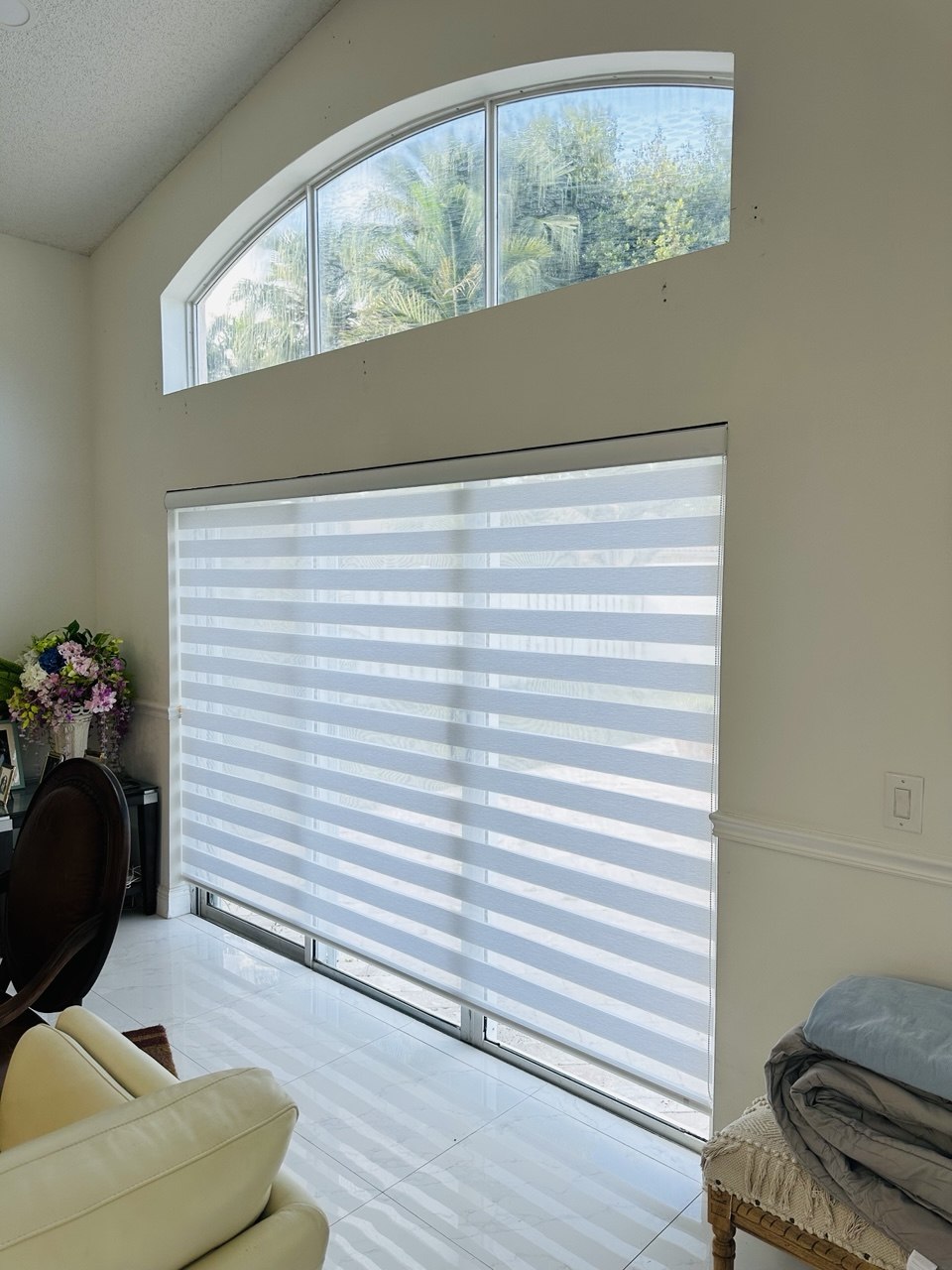
Residential house · Manual
Custom Zebra and Roller Shades Fort Lauderdale
This Fort Lauderdale residential project included the installation of 8 custom window shades, combining zebra shades and roller shades across multiple rooms. The installation included a large living-area opening, bathroom windows, and additional room windows, with both installation-process and before-and-after photos documented.
Zebra Blinds, Roller Shades
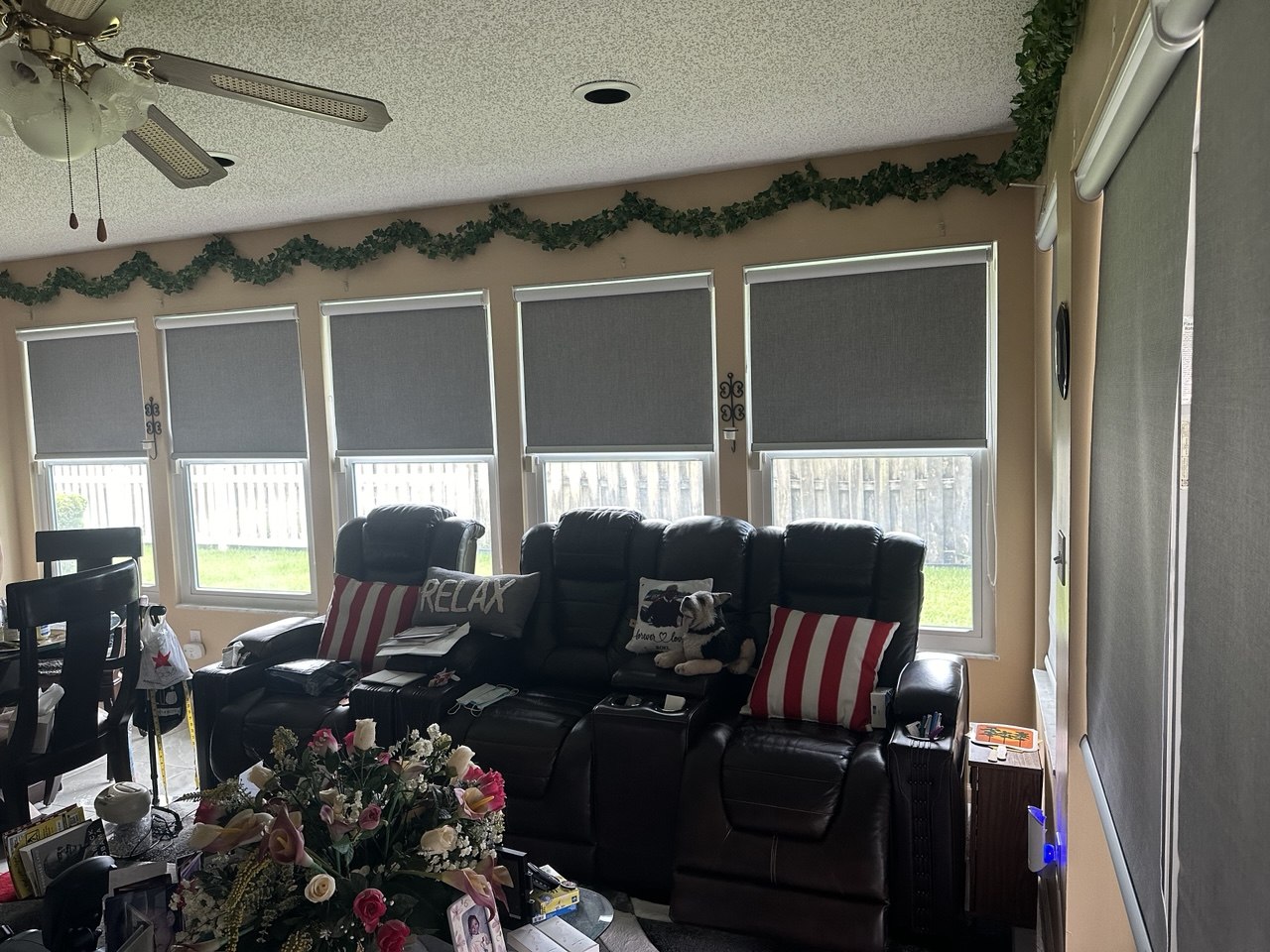
Residential home · Motorized and manual
Blackout Roller Shades in Royal Palm Beach
Miami Smart Blinds completed this blackout roller shades project in a Royal Palm Beach home, combining motorized and manual controls across multiple windows and a large glass-door area.
Roller Shades
Roller Shades installed near you
These are the markets we install roller shades in most often. We cover every city in Miami-Dade, Broward and Palm Beach — see the full service area list.
Other product lines
Alternating sheer and solid bands that switch from soft daylight to privacy in one pull.
Shangri-La ShadesSoft fabric vanes suspended between sheer layers for elegant daylight, privacy and adjustable light control.
Cellular (Honeycomb) ShadesHoneycomb cells that trap air and cut cooling costs in the Florida heat.
Dual ShadesTwo shades on one bracket — solar screen by day, blackout by night.
Outside (Exterior) ShadesPatio and balcony shades that stop heat before it reaches the glass.
Roman ShadesSoft fabric folds that bring warmth and tailored texture to a room.
Drapery & CurtainsCustom drapery panels and curtains that soften a room and layer over any shade.
Free in-home measure across South Florida
Tell us the rooms and we'll bring samples, measure every opening and quote on the spot — no charge, no pressure.